| |
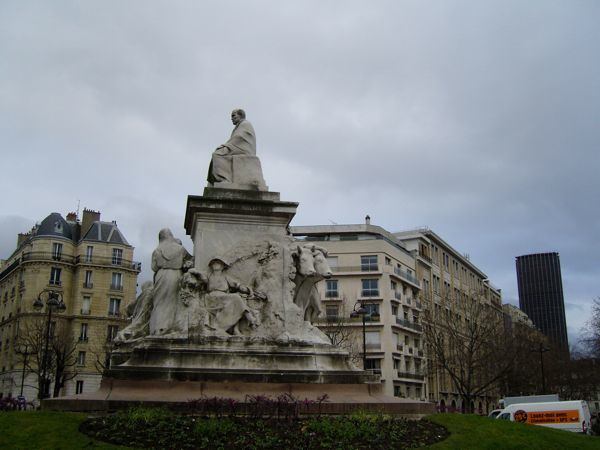
The discoveries of Louis Pasteur supported Semmelweis's earlier work. Linking microorganisms with disease, Lousi Pasteur brought about a revolution in medicine. Pasteur (1822 - 1895) was a French chemist and microbiologist who was best known for his remarkable breakthroughs in the causes and prevention of disease. His experiments supported the germ theory of disease, also reducing mortality from puerperal fever (childbed), and he created the first vaccine for rabies. He was best known to the general public for inventing a method to stop milk and wine from causing sickness - this process came to be called pasteurization. He is regarded as one of the three main founders of microbiology, together with Ferdinand Cohn and Robert Koch. Pasteur made many discoveries in the field of chemistry, most notably the asymmetry of crystals. He is buried beneath the Institut Pasteur, a rare honor in France, where being buried in a cemetery is mandatory save for the fewer than 300 "Great Men" who are entombed in the Pantheon. Pasteur also invented with Claude Bernard (1813-1878) the process of pasteurization still in use today.
We would like to thank Wikipedia for much of the information above.
医学英語翻訳、医学英文正サービス ( 英文ネイティブチェック ) 等につきましては、日本での代表者連絡先 : honyaku@excom-system.com までご連絡ください。
このページの先頭へ
エクスコムシステム ランゲージ サービス(ELS) Copyright 2009無断転載禁止。